Titanic submersible implosion: James Cameron sees ‘terrible irony’ over Titan disaster
The director of the award-winning movie “Titanic” is speaking out about the OceanGate Titan disaster, calling it a “terrible irony.”
He also had tough words for the company that embarked on the tourist excursions.
“OceanGate shouldn’t have been doing what it was doing. I think that’s pretty clear,” Cameron told BBC News, according to CBS News. “I wish I had been more vocal about that, but I think I was unaware that they weren’t certified because I wasn’t really studying it.”
But Cameron said that the company “didn’t get certified because they knew they wouldn’t pass” alleging that OceanGate had “cut corners” he told the BBC.
Missing Titanic tourist sub: Titan suffered ‘catastrophic implosion,’ killing 5 onboard
The submersible was not required to be certified, news outlets have reported.
Cameron, in addition to directing the film “Titanic,” has done 33 submersible dives to the wreckage of the doomed ocean liner.
He has also done a dive into the deepest known oceanic trench at 10,912 meters or about 35,800 feet in 2012. The RMS Titanic, and now the Titan, sits at about 3,810 meters or 12,500 feet.
Cameron said it was ironic that the Titanic and Titan suffered similar fates because of hubris.
“We now have another wreck that is based on unfortunately the same principles of not heeding warnings,” he said. “OceanGate were warned.”
Several people had warned OceanGate saying “You are going on a path to catastrophe,” Cameron said.
The New York Times said that Marine Technology Society sent OceanGate a letter in 2018, saying, the company’s “ experimental approach adopted by Oceangate could result in negative outcomes (from minor to catastrophic) that would have serious consequences for everyone in the industry.”
Titanic tourist sub: What is a ‘catastrophic implosion?’
A former employee of OceanGate also warned about potential safety issues as early as 2018, BBC News reported.
Maritime experts were also concerned about the materials used to craft the Titan, as well as the shape of the submersible, The Washington Post reported.
The Titan was made of carbon fiber in a cylindrical shape with two titanium ends to allow for more passengers. The titanium caps were found on the ocean floor apart from the cylinder, the Post reported.
OceanGate co-founder Guillermo Sohnlein, who is no longer with the company, said that the program to develop the Titan was “very robust,” countering Cameron’s and others’ claims.
“Any expert who weighs in on this, including Mr. Cameron, will also admit that they were not there for the design of the sub, for the engineering of the sub, the building of the sub and certainly not for the rigorous test program that the sub went through,” Sohnlein told the BBC.
Cameron added he knew what happened and where crews would find the remnants of the Titan.
Wife of Titan pilot, OceanGate CEO, is great-great-granddaughter of couple who died on Titanic
The past week “felt like a prolonged and nightmarish charade where people are running around talking about banging noises and talking about oxygen and all this other stuff,” he told the BBC.
“I knew that sub was sitting exactly underneath its last known depth and position. That’s exactly where they found it,” Cameron added.
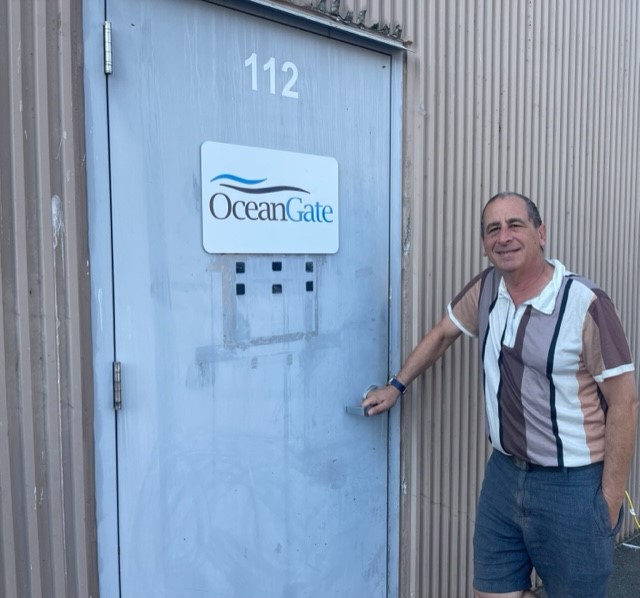
Mike Reiss and his wife took a trip to the Titanic on the submersible "Titan" in 2022.

Mike Reiss and his wife took a trip to the Titanic on the submersible "Titan" in 2022.

Mike Reiss and his wife took a trip to the Titanic on the submersible "Titan" in 2022.
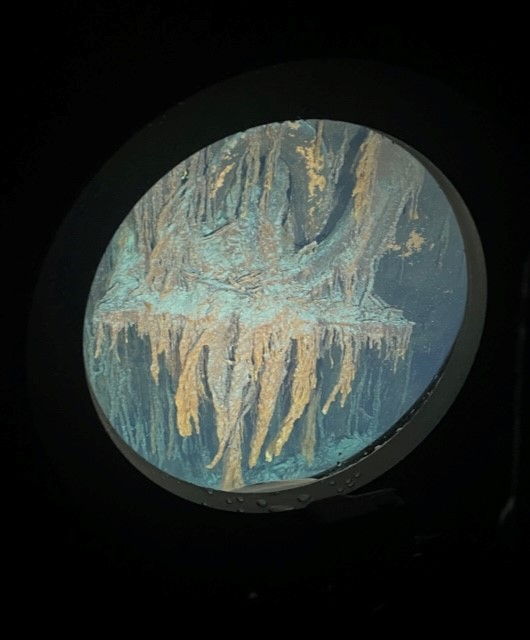
Mike Reiss and his wife took a trip to the Titanic on the submersible "Titan" in 2022.

Mike Reiss and his wife took a trip to the Titanic on the submersible "Titan" in 2022.

Mike Reiss and his wife took a trip to the Titanic on the submersible "Titan" in 2022.

Mike Reiss and his wife took a trip to the Titanic on the submersible "Titan" in 2022.
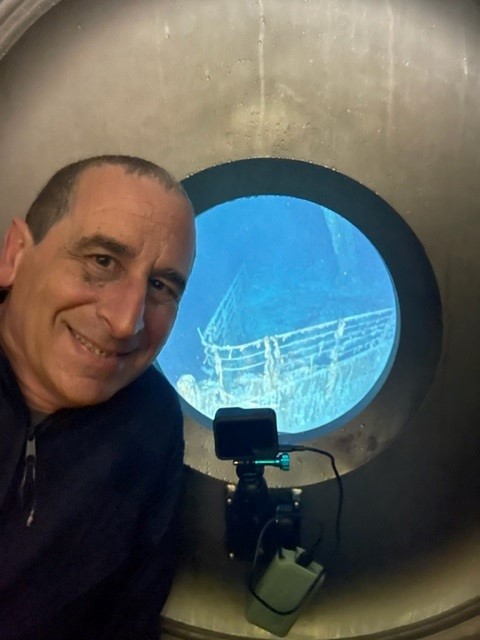
Mike Reiss and his wife took a trip to the Titanic on the submersible "Titan" in 2022.
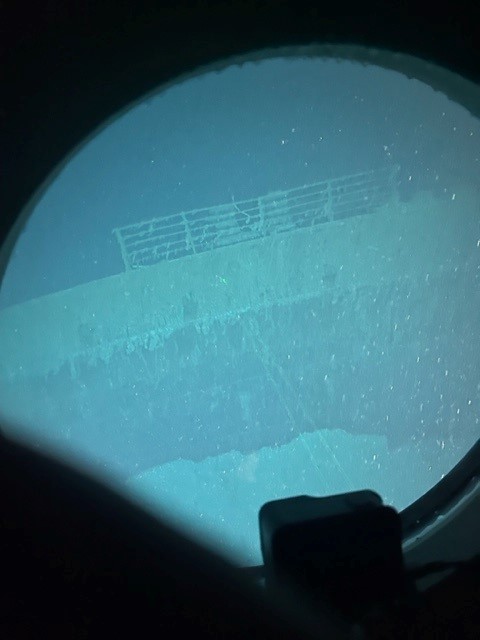
Mike Reiss and his wife took a trip to the Titanic on the submersible "Titan" in 2022.
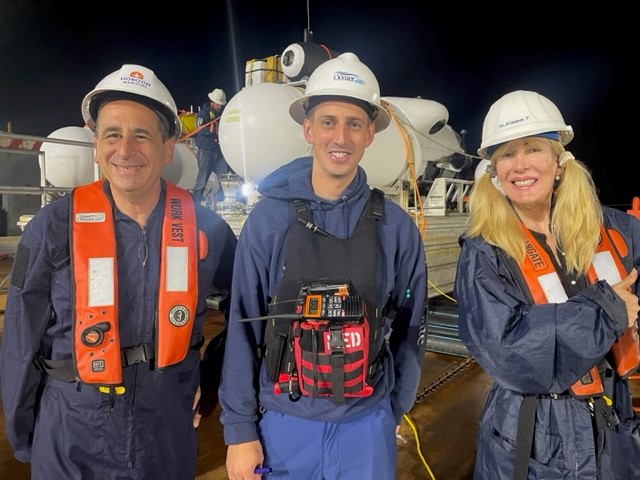
Mike Reiss and his wife took a trip to the Titanic on the submersible "Titan" in 2022.

Mike Reiss and his wife took a trip to the Titanic on the submersible "Titan" in 2022.

Mike Reiss and his wife took a trip to the Titanic on the submersible "Titan" in 2022.
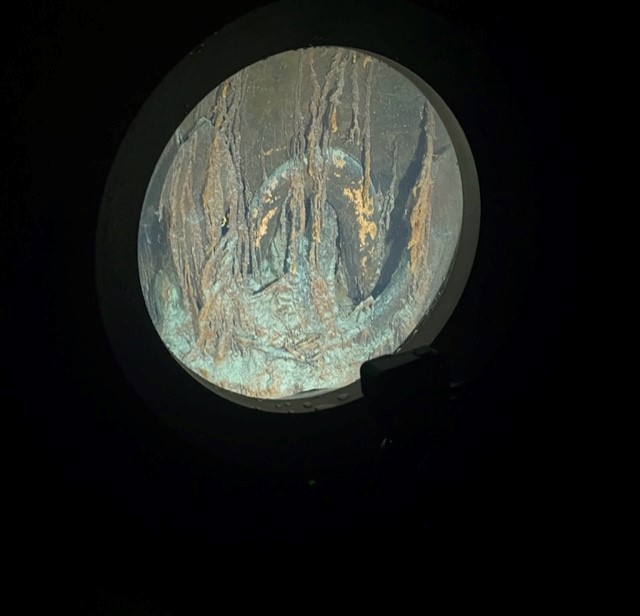
Mike Reiss and his wife took a trip to the Titanic on the submersible "Titan" in 2022.
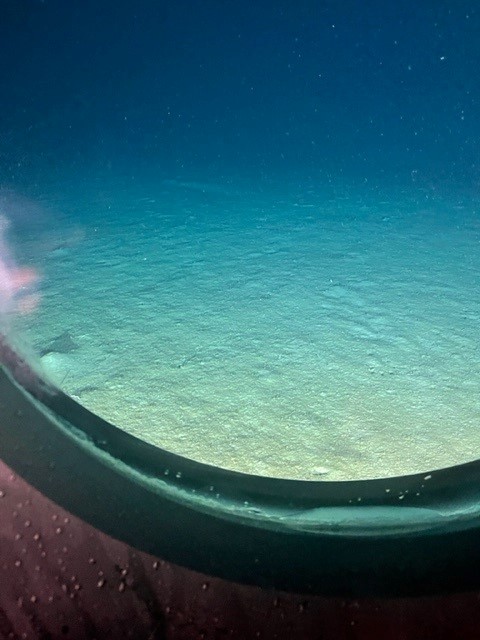
Mike Reiss and his wife took a trip to the Titanic on the submersible "Titan" in 2022.
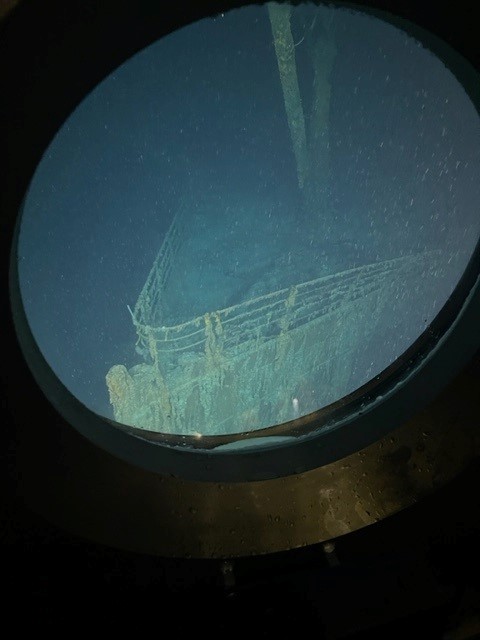
Mike Reiss and his wife took a trip to the Titanic on the submersible "Titan" in 2022.
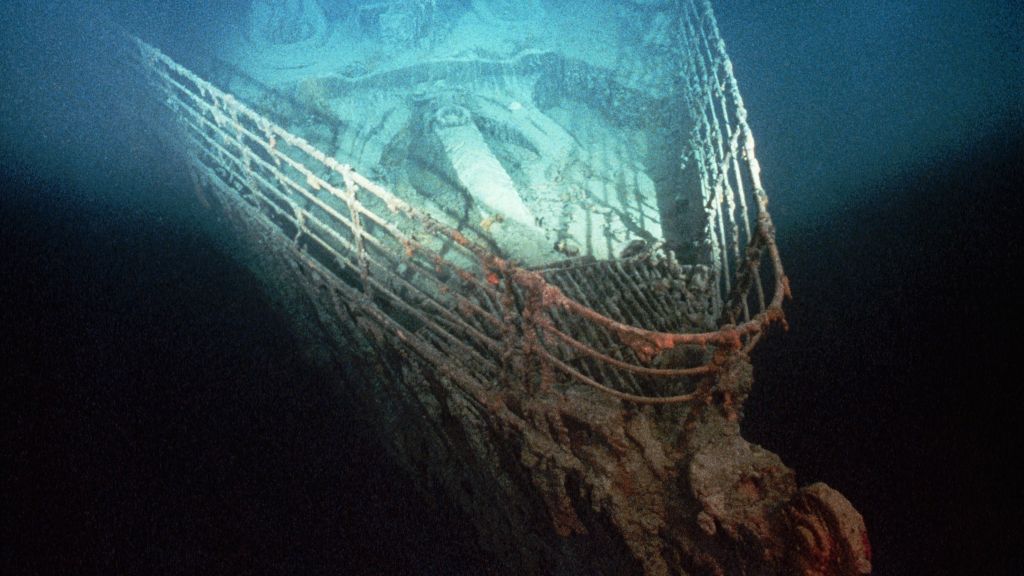
FILE PHOTO: On September 1, 1985, underwater explorer Robert Ballard located the world’s most famous shipwreck. The Titanic lay largely intact at a depth of 12,000 feet off the coast of St. John’s, Newfoundland. Using a small submersible craft, Ballard explored the wreck in 1986, taking a series of spectacular and haunting pictures and giving the world its first glimpse of the legendary ship in 73 years.
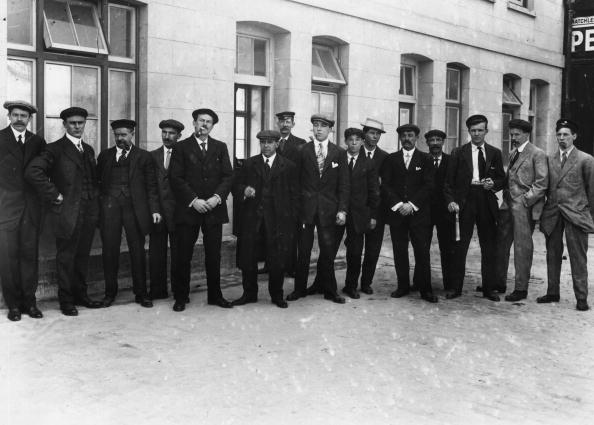
29th April 1912: Stewards who survived the Titanic shipwreck line up outside a first class waiting room before being called in for questioning by the board of enquiry. (Photo by Topical Press Agency/Getty Images)
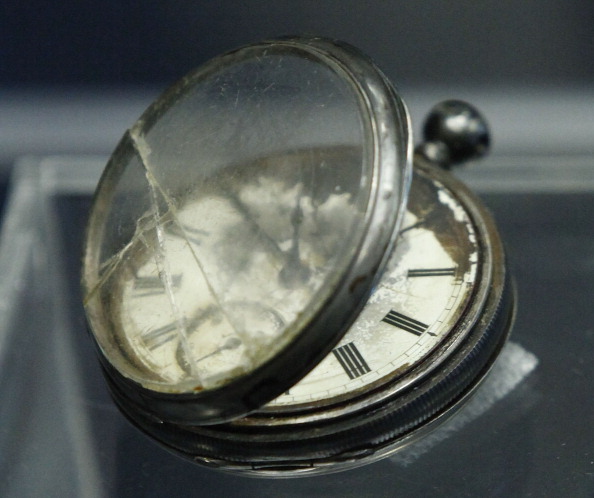
NEW YORK, NY – JANUARY 05: Artifacts recovered from the wreck site of the RMS Titanic on display at the Titanic Auction preview at the Intrepid Sea-Air-Space Museum on January 5, 2012 in New York City. (Photo by John Lamparski/WireImage)
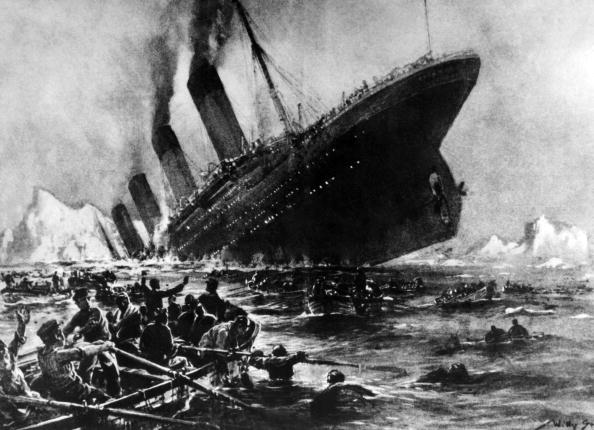
Undated artist impression showing the 14 April 1912 shipwreck of the British luxury passenger liner Titanic off the Nova-Scotia coasts, during its maiden voyage. The supposedly ‘Unsinkable’ Titanic set sail down Southampton Water en-route to New York on 10 April 1912 and met disaster on 14 April 1912 after hitting an iceberg off Newfoundland shortly before midnight and sinking two hours later, killing about 1,500 passengers and ship personnel. (Photo credit: OFF/AFP via Getty Images)
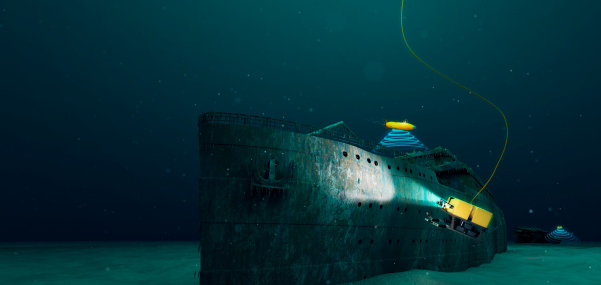
A.U.V.s explore the wreck of the Titanic
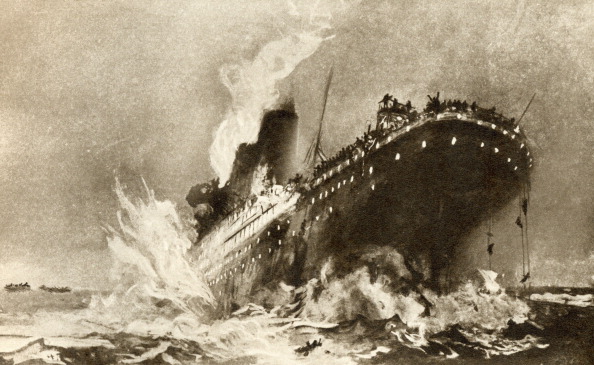
RMS Titanic Of The White Star Line Sinking Around 2 20 Am Monday Morning April 15 1912 After Hitting An Iceberg In The North Atlantic (Photo by: Universal History Archive/Universal Images Group via Getty Images)
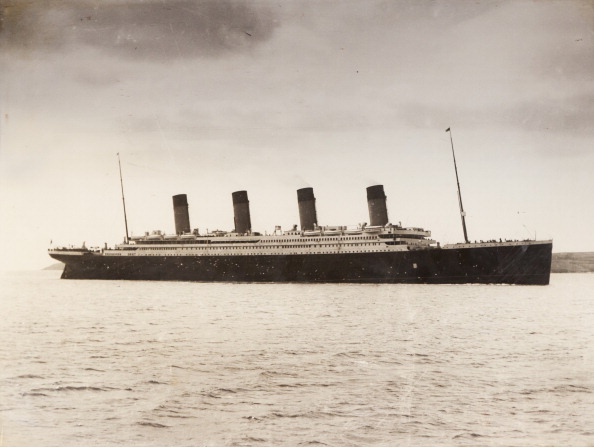
The 46 328 Tons RMS Titanic Of The White Star Line Which Sank At 2 20 Am Monday Morning April 15 After Hitting Iceberg In North Atlantic 1912 (Photo by: Universal History Archive/Universal Images Group via Getty Images)
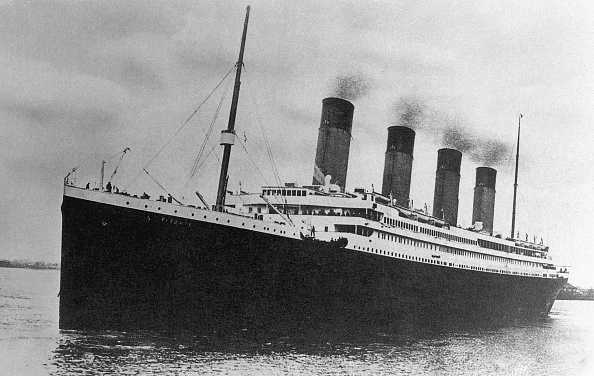
The White Star Line passenger liner R.M.S. Titanic embarking on its ill-fated maiden voyage.
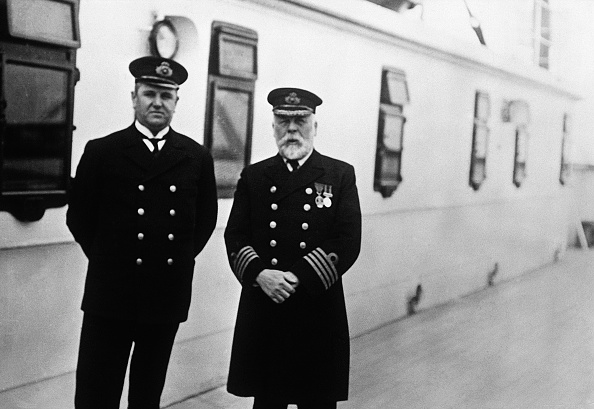
Purser Hugh Walter McElroy and Captain Edward J. Smith aboard the Titanic during the run from Southampton to Queenstown, England. The man who took the photograph, Rev. F.M. Browne, got off at Queenstown, three days before the ship hit an iceberg and sank. (Photo by Ralph White/CORBIS/Corbis via Getty Images)
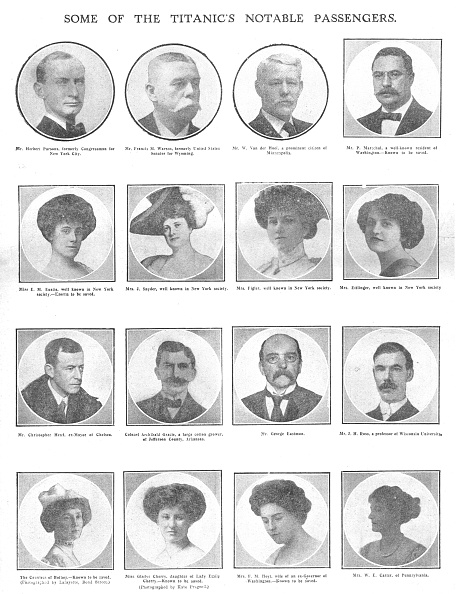
Some of the Titanic’s Notable Passengers’, April 20, 1912. Photographs of well-to-do passengers, some ‘known to be saved’. The White Star Line ship RMS ‘Titanic’ struck an iceberg in thick fog off Newfoundland on 14 April 1912. She was the largest and most luxurious ocean liner of her time, and thought to be unsinkable. In the collision, five of her watertight compartments were compromised and she sank. Out of the 2228 people on board, only 705 survived. A major cause of the loss of life was the insufficient number of lifeboats she carried. Page 5, from "Titanic In Memoriam Number", a special supplement in "The Daily Graphic" newspaper issued following the sinking of the ‘Titanic’ on 15 April 1912, published on 20 April 1912. Artist Unknown. (Photo by The Print Collector/Getty Images)
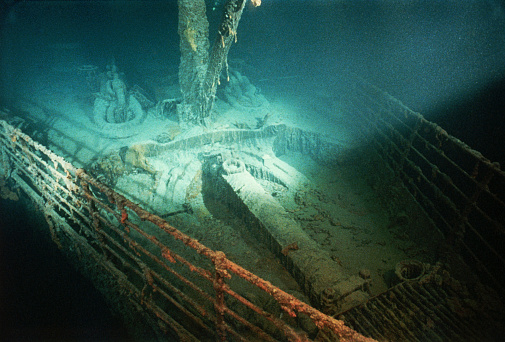
A spare anchor sits in its well on the forepeek of the shipwrecked Titanic.


Allan Carlin, general counsel for RMS Titanic Inc., poses for photographers in front of a section of the hull of the RMS Titanic at the Commonwealth Pier in Boston, 21 August. The 20-ton steel piece, which was recovered 10 August from the floor of the Atlantic off Newfoundland 10 miles from the original wreck site, will join the Titanic exhibition underway at the World Trade Center in Boston. (Photo credit: STUART CAHILL/AFP via Getty Images)
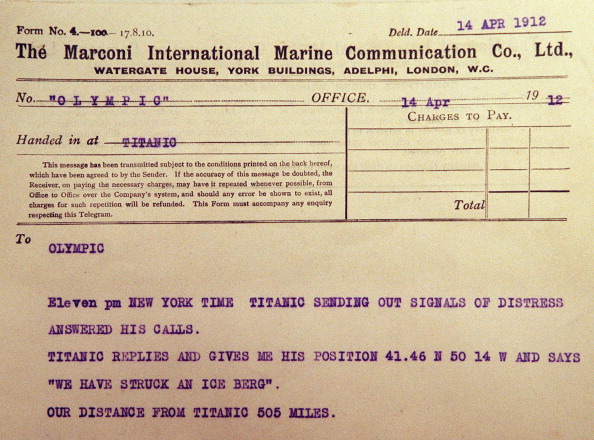
A telegraph message from a ship called Olympic reports that it has received word from the Titanic that it has stuck an iceberg. The message is one of several similar messages from ships in the vicinity of the Titanic detailing the events leading up to it’s sinking which were on display 13 February at Christie’s East in New York City and will be auctioned as part of a Maritime auction on 17 February. AFP PHOTO Matt CAMPBELL (Photo credit: MATT CAMPBELL/AFP via Getty Images)

Features which Contributed to the Splendours of the Titanic’, April 20, 1912. A single-berth state room, a deck state room, the swimming pool, the Turkish Bath Cooling Room, the Verandah Cafe, the main staircase, the Georgian Smoke Room and the restaurant. The luxurious interior decoration included French walnut panelling, mother-of-pearl inlay and climbing plants. The White Star Line ship RMS ‘Titanic’ struck an iceberg in thick fog off Newfoundland on 14 April 1912. She was the largest and most luxurious ocean liner of her time, and thought to be unsinkable. In the collision, five of her watertight compartments were compromised and she sank. Out of the 2228 people on board, only 705 survived. A major cause of the loss of life was the insufficient number of lifeboats she carried. Page 6, from "Titanic In Memoriam Number", a special supplement in "The Daily Graphic" newspaper issued following the sinking of the ‘Titanic’ on 15 April 1912, published on 20 April 1912. Artist Unknown. (Photo by The Print Collector/Getty Images)
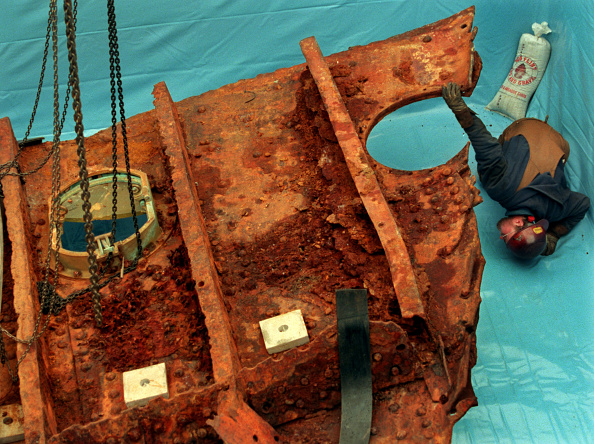
Titanic — A 20-ton section of the hull of the Titanic was lowered into a pool underneath the Union Depot Concourse, the location of "Titanic The Exhibition." The piece was retrieved from the wreck site of the Titanic on August 10, 1998, during the most recent expedition to the ship’s location at the bottom of the North Atlantic. The hull piece measures 20 feet high and 26 feet wide and is by far the largest object to ever have been retrieved from the wreck site. The section of the hull, which has several portholes and is reinforced on the inside by steel beams, comes from a part of the ship midway between the port and the stern. It is the outer wall of an unoccupied first-class cabin on C-deck.The piece will be displayed in a 5 foot deep pool filledwith a solution of soda ash and water. This will be the beginning of many months of conservation treatment designed to draw the salts out of the metal.(Photo By JERRY HOLT/Star Tribune via Getty Images)
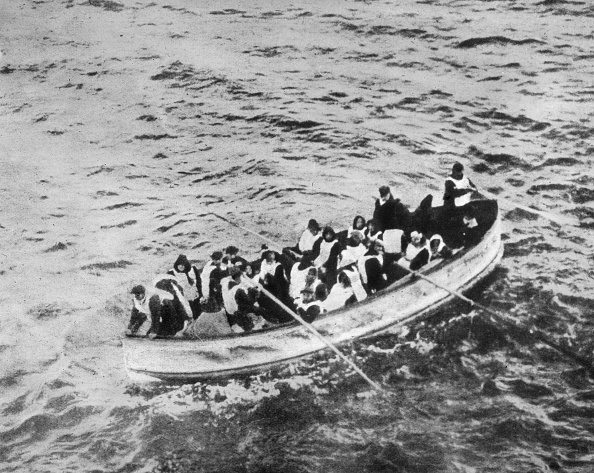
Sinking of the Titanic April 1912: lifeboat of the Titanic, seen from the deck of the ship Carpathia (Photo by ullstein bild/ullstein bild via Getty Images)
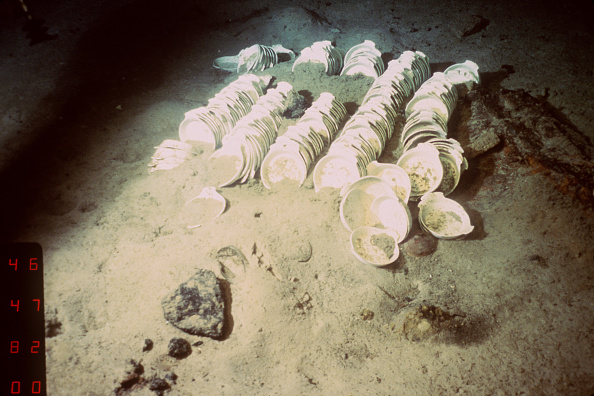
Sets of breakfast dishes from the sunken Titanic (1912) are shown in New York, 25 August 1987, in the position they were found by expedition Titanic 1987. (Photo by – / AFP) (Photo credit should read -/AFP via Getty Images)
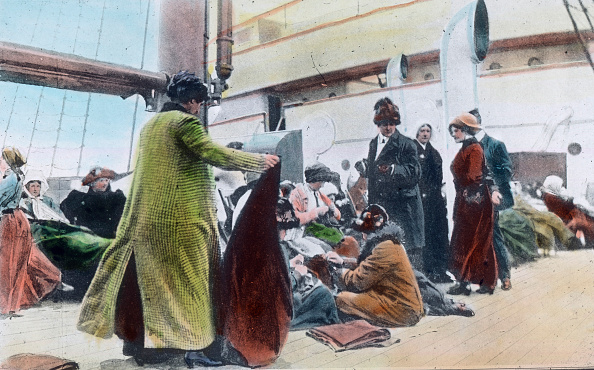
On board the RMS Carpathia, the castaways of the RMS Titanic are supplied with blankets to keep warm. (Photo by: Carl Simon/United Archives/Universal Images Group via Getty Images)
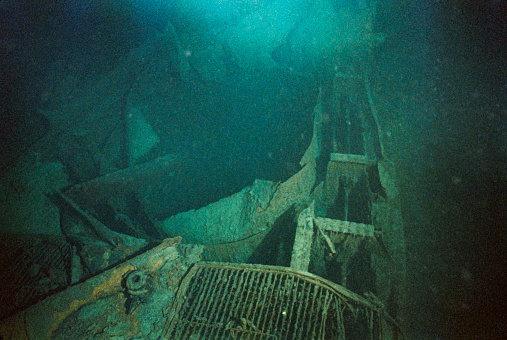
The hole from the number one funnel of the shipwrecked Titanic.
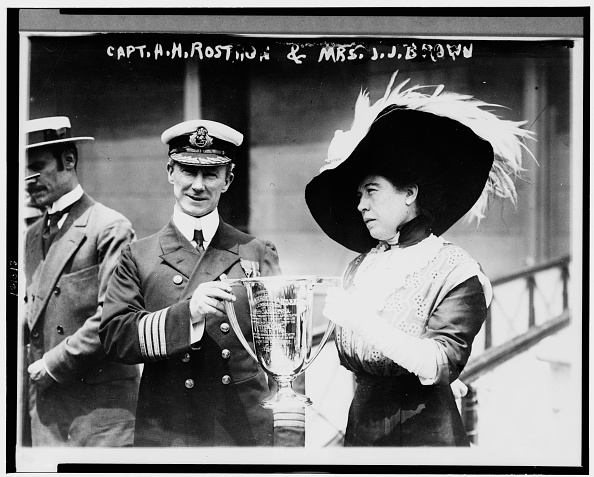
British merchant seaman Sir Arthur Henry Rostron (1869 – 1940) (center), captain of the RMS Carpathia, is presented with a trophy cup by American socialite Molly Brown (1867 – 1932), New York, New York, May 29, 1912. The Carpathia had been instrumental in the rescue of 705 passengers, one of whom was Brown, from the sinking RMS Titanic the previous month. (Photo by Bain Photo Collection/PhotoQuest/Getty Images)
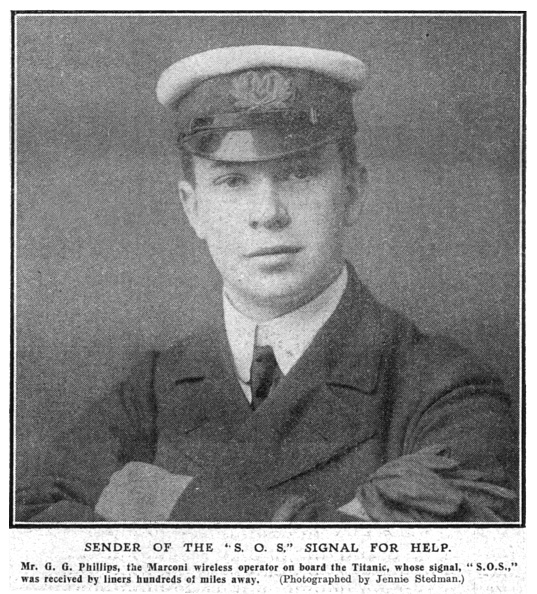
Sender of the "S. O. S."’ Signal for Help’, (April 20), 1912. John George Phillips (nicknamed Jack, 1887-1912) was the ship’s senior wireless operator who tried to save the ‘Titanic’ and all those on board by transmitting pleas for help until the ship lost power and sank. He died in the tragedy and his body was never recovered. The White Star Line ship RMS ‘Titanic’ struck an iceberg in thick fog off Newfoundland on 14 April 1912. She was the largest and most luxurious ocean liner of her time, and thought to be unsinkable. In the collision, five of her watertight compartments were compromised and she sank. Out of the 2228 people on board, only 705 survived. A major cause of the loss of life was the insufficient number of lifeboats she carried. Page 8, from "Titanic In Memoriam Number", a special supplement in "The Daily Graphic" newspaper issued following the sinking of the ‘Titanic’ on 15 April 1912, published on 20 April 1912. Artist Unknown. (Photo by The Print Collector/Getty Images)
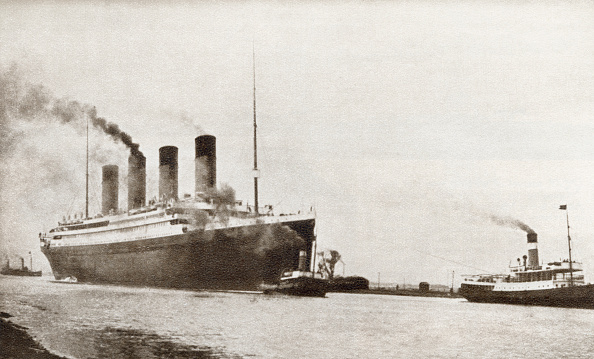
RMS Titanic passenger liner of the White Star Line. From The Story of 25 Eventful Years in Pictures, published 1935. (Photo by: Universal History Archive/Universal Images Group via Getty Images)
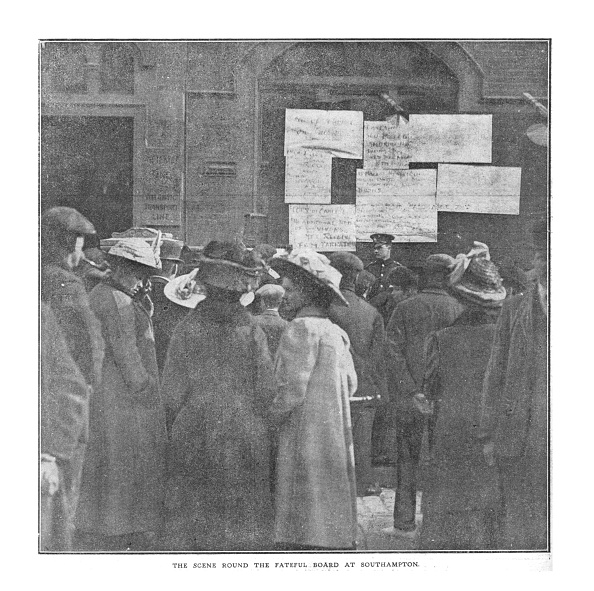
The Scene Round the Fateful Board at Southampton’, April 20, 1912. Anxious relatives and friends wait for news after the disaster. The White Star Line ship RMS ‘Titanic’ struck an iceberg in thick fog off Newfoundland on 14 April 1912. She was the largest and most luxurious ocean liner of her time, and thought to be unsinkable. In the collision, five of her watertight compartments were compromised and she sank. Out of the 2228 people on board, only 705 survived. A major cause of the loss of life was the insufficient number of lifeboats she carried. Page 20, from "Titanic In Memoriam Number", a special supplement in "The Daily Graphic" newspaper issued following the sinking of the ‘Titanic’ on 15 April 1912, published on 20 April 1912. Artist Unknown. (Photo by The Print Collector/Getty Images)
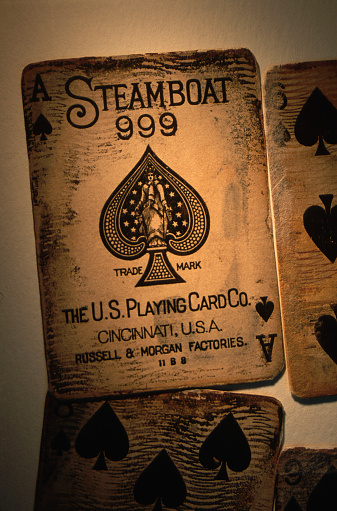
Playing cards recovered from the wreck of the RMS Titanic are displayed at an exhibition in Memphis, Tennessee.
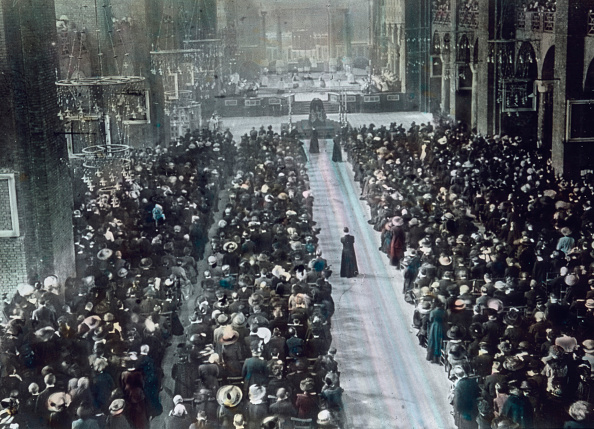
Funeral and memorial service for the dead of the shipwreck of the RMS Titanic, 1912. (Photo by: Carl Simon/United Archives/Universal Images Group via Getty Images)