Lahaina wildfire: ATF arrives to help look for victims, find how fire started
MAUI, Hawaii – The federal government has dispatched a team to Hawaii to investigate how the deadly wildfire started on Maui.
Members of the Bureau of Alcohol, Tobacco, Firearms and Explosives were sent to the island on Thursday to find out exactly where the fire started and how it was sparked, NBC News reported.
The ATF has sent one electrical engineer, two certified fire investigators, a certified fire investigator candidate and an arson and explosives group supervisor, the Honolulu Star-Advertiser reported. They are part of the agency’s National Response Team, which has been activated 21 times this fiscal year and 910 times since it was started in 1978,
They will also work with local authorities to find missing people and identify those killed.
Hawaii wildfires: Death toll rises to 111; Biden will visit area
The FBI is also in the area to collect DNA samples from family members of those who remain missing.
There are approximately 1,000 people who are unaccounted for, CNN reported. More than 2,000 homes and businesses have been destroyed.
News of the federal officials’ dispatch came after State Attorney General Anne Lopez announced that a third-party private group would be conducting an independent investigation, Hawaii News Now reported. The group will look at the performances of agencies in preparing and responding to the fire. The information gathered will be used to make adjustments to the state’s response to future emergencies.
Meanwhile, the head of Maui’s Emergency Management Agency has stepped down. Administrator Herman Andaya resigned, citing unspecified health reasons, The Associated Press reported. No details of what those health reasons were given. His resignation was effective immediately.
The agency had been criticized for not activating the island’s outdoor alert sirens. Andaya said that he was afraid that if they had been used, the people who needed to evacuate would go “mauka,” or a Hawaiian navigational term that means heading inland or toward mountains.
“If that was the case, then they would have gone into the fire,” Andaya had said, according to the AP.
However, Sen. Angus McKelvey called that line of thought “insulting.”
“I’ve heard the line that ‘people would have panicked and ran up to the mountains because it’s a tsunami siren.’ … It’s insulting to think that people would be that clueless, that they wouldn’t know that sirens blasting was because of the fire,” McKelvey told CNN. “These are not tsunami sirens. They’re disaster sirens.”
It wasn’t just the lack of warning sirens that caused the fire to contribute to the loss of life. There was also a water shortage and escape routes were blocked by vehicles that were caught in the fire, the AP reported.
At least 111 people were killed, mostly in the area around Lahaina on the island’s west coast, CNN reported. Most of the area still hasn’t been searched.
It has been speculated that the blaze was started by powerlines but that has not been confirmed. It has been noted that Hawaiian Electric, which supplies power to Maui, did not power down the lines when high winds created dangerous fire conditions. There had been faults found on the grid before the fires started, CNN reported.
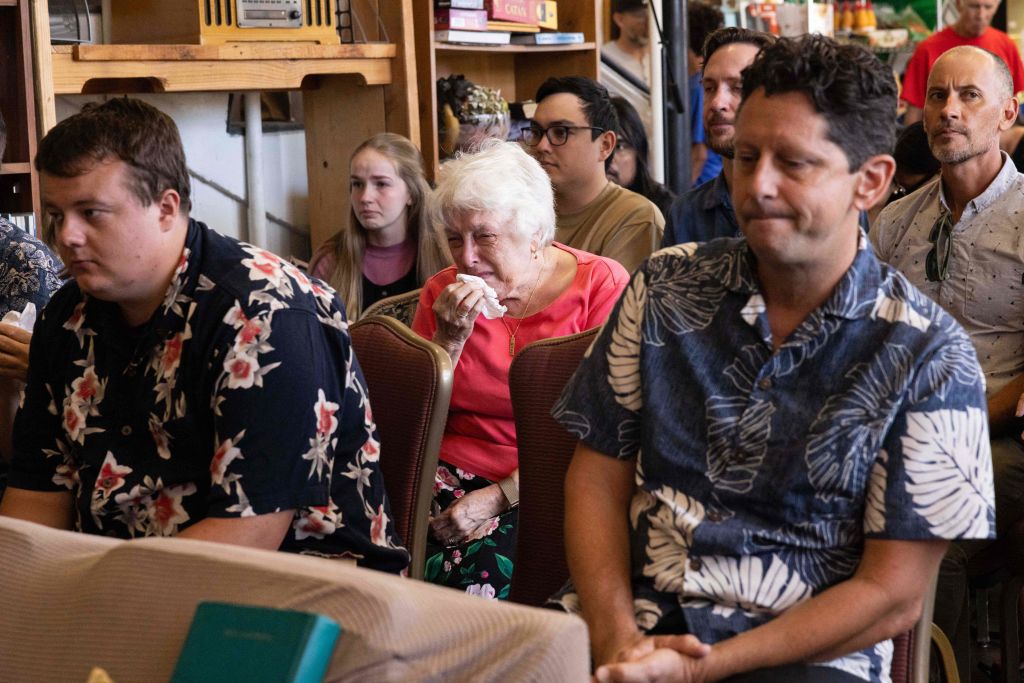
An attendee reacts during a Sunday church service held at Lahaina’s Grace Baptist Church.

A burnt-out car lies in the driveway of a charred house in the aftermath of a wildfire in Lahaina, Hawaii.
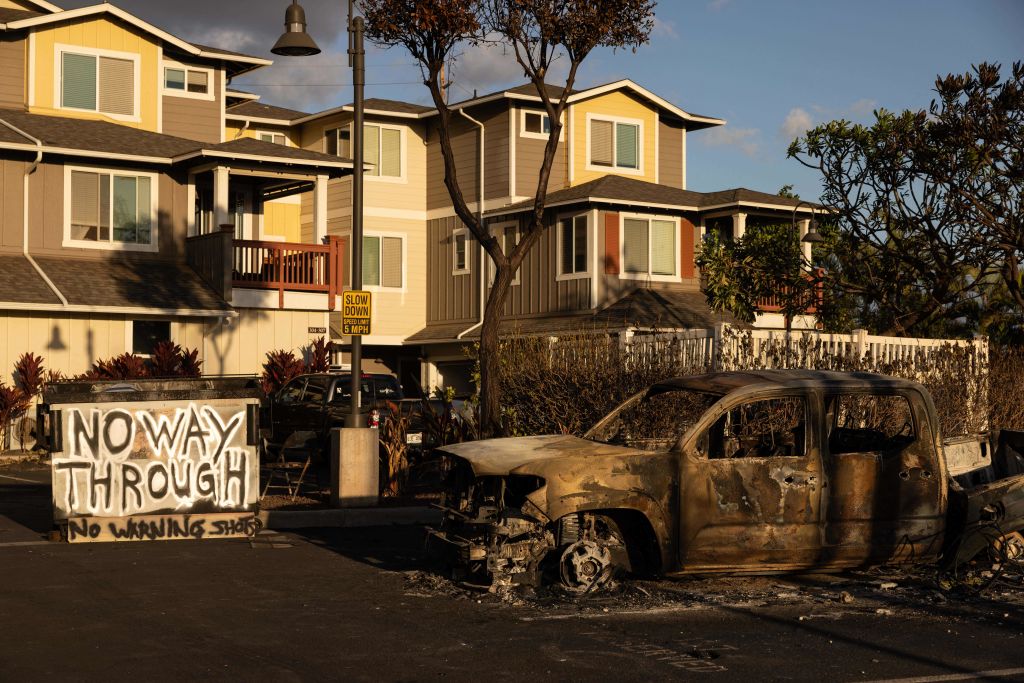
A burnt out car and a sign reading "No Way Through" stand in the driveway of charred apartment complex in the aftermath of a wildfire in Lahaina.
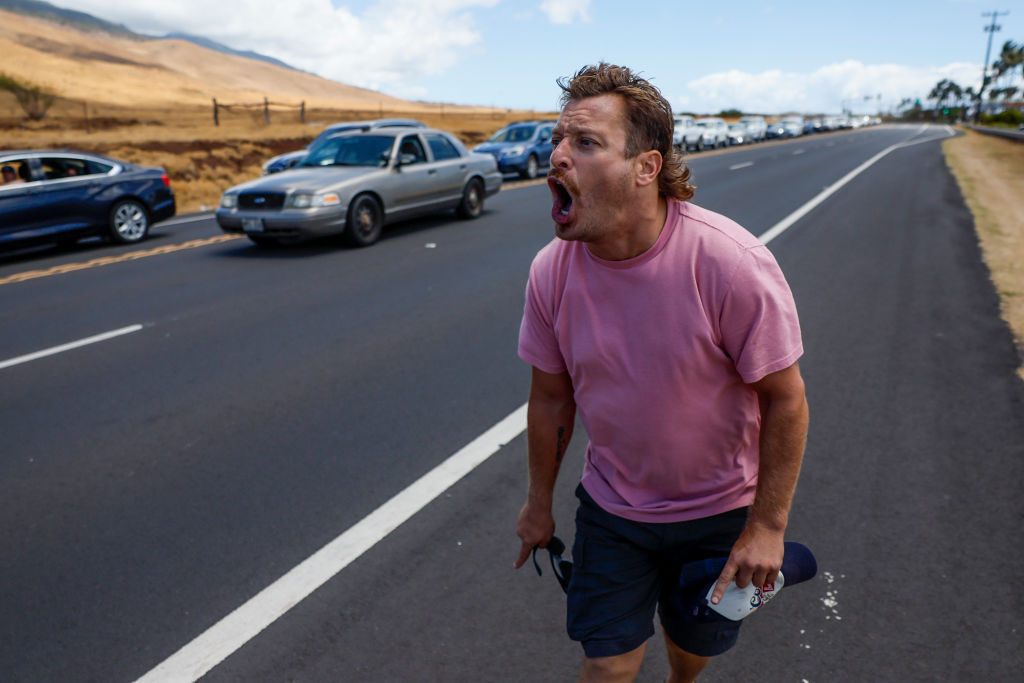
Tempers flared as residents waited in long lines as they are not allowed to pass a checkpoint to return to their homes in Lahaina.
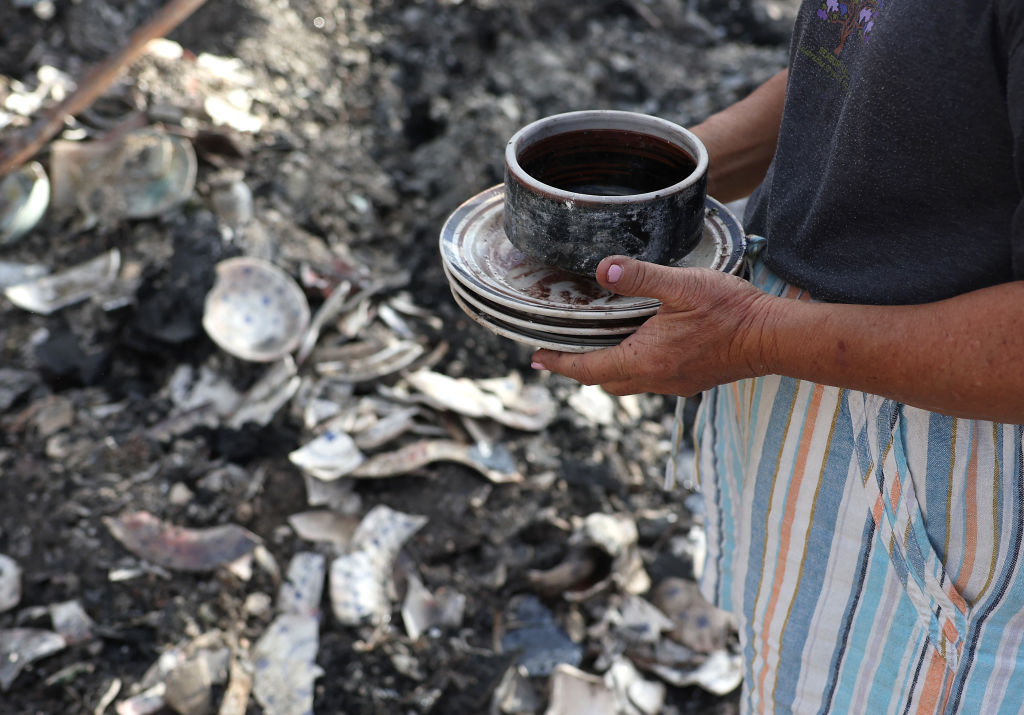
A resident found some dishes among the rubble of a house that survived the wildfire.
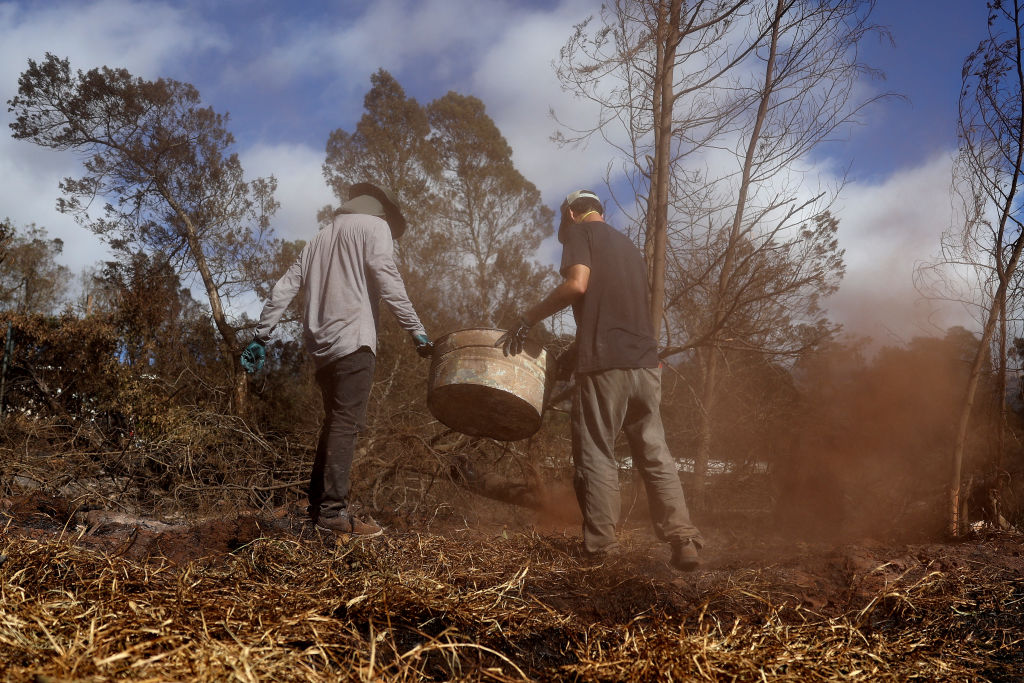
Crews are searching areas for flareups, items, and missing people following the wildfires in Hawaii swept through the area.
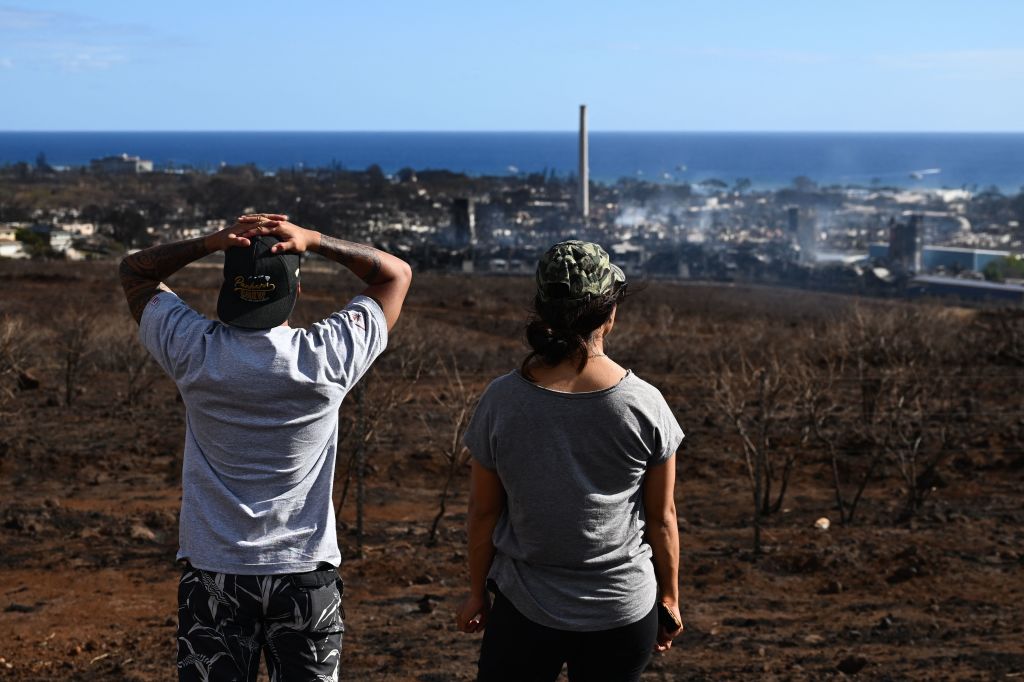
Maui residents John Rey Serrano and Lexie Lara look from a road above Lahaina Town in the aftermath of a wildfire in Lahaina, western Maui, Hawaii.
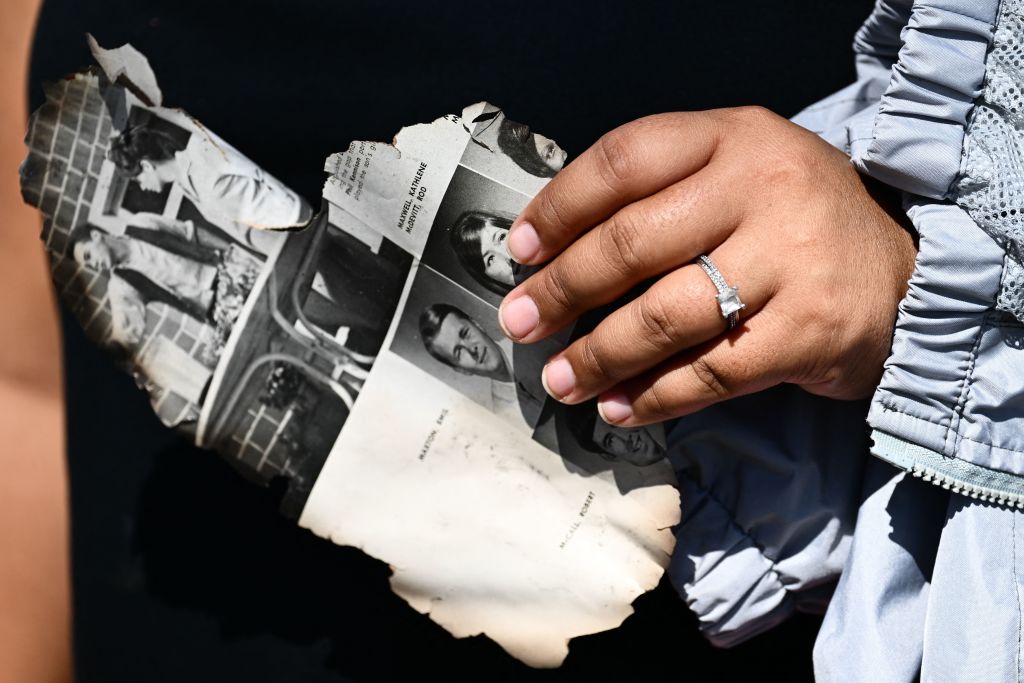
Davilynn Severson holds a page of a yearbook as she looks for belongings through the ashes of their family’s home in the aftermath of a wildfire in Lahaina.

Maui resident John Rey Serrano reacts while looking from a road above Lahaina Town in the aftermath of a wildfire in Lahaina, western Maui, Hawaii.

Hano Ganer looks through the ashes of his family’s home on Malolo Place in Lahaina, western Maui, Hawaii.

Trixy Nuesca-Ganer looks through the ashes of their family’s home in the aftermath of a wildfire in Lahaina.
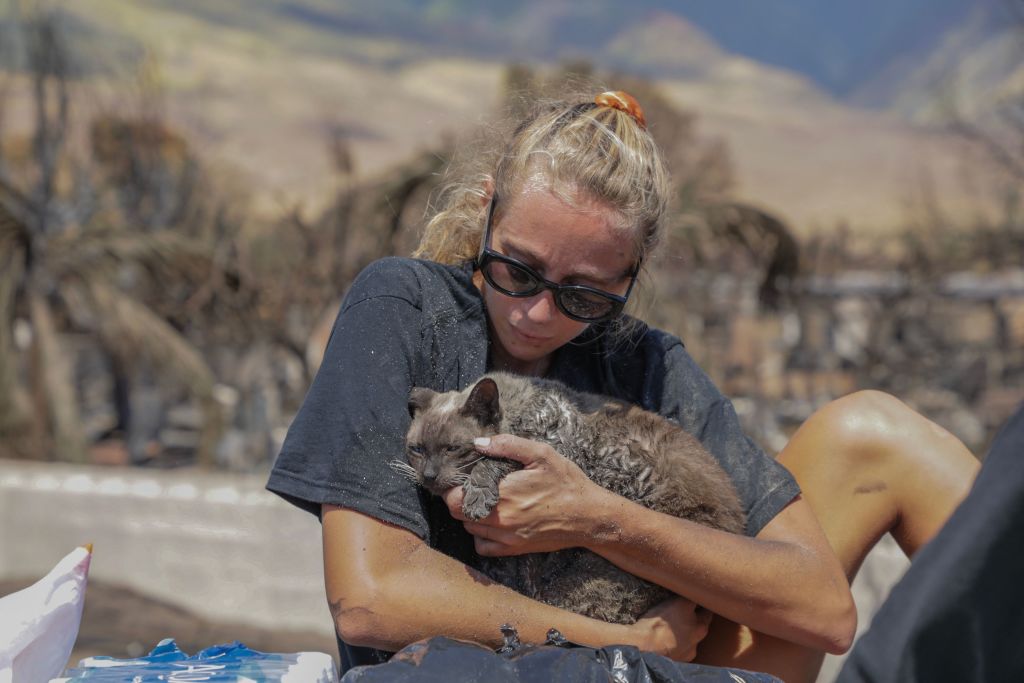
A woman cradles her cat after finding him in the aftermath of a wildfire in Lahaina, western Maui, Hawaii.

Burnt books are seen by the public library in the aftermath of a wildfire in Lahaina, western Maui, Hawaii.
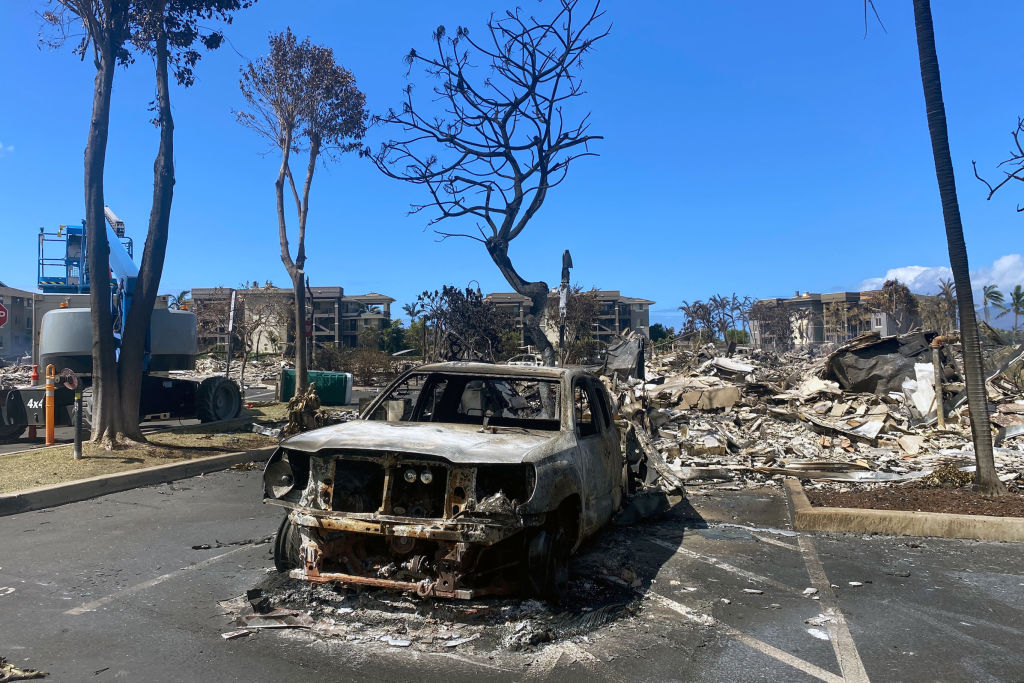
A burned cars sits among destroyed buildings in the aftermath of a wildfire in Lahaina, western Maui, Hawaii.
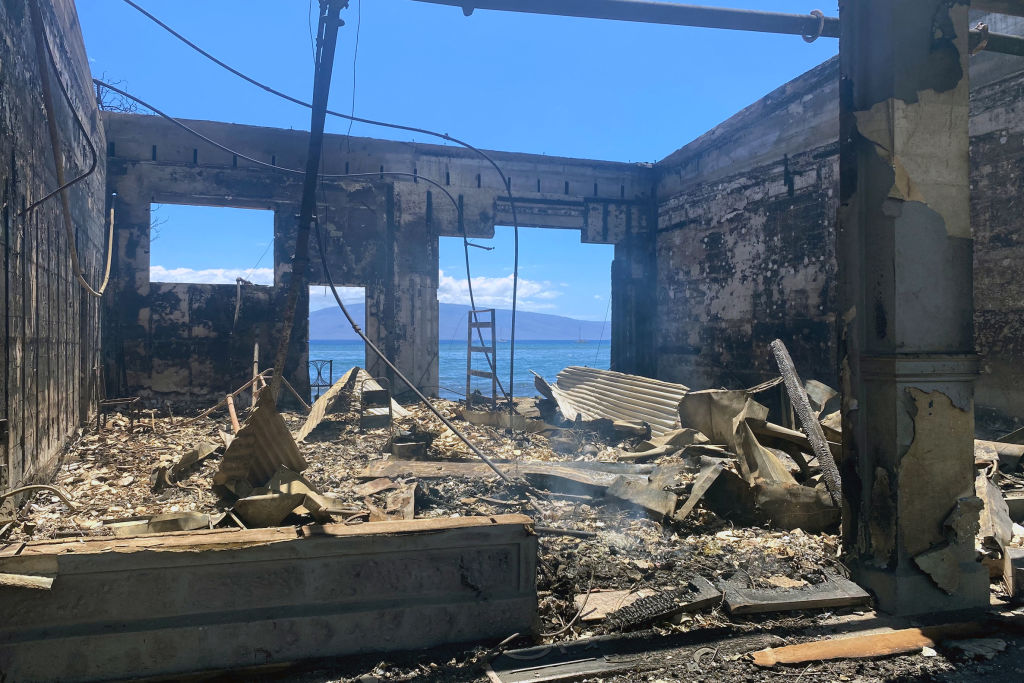
A destroyed building is pictured in the aftermath of a wildfire in Lahaina, western Maui, Hawaii.
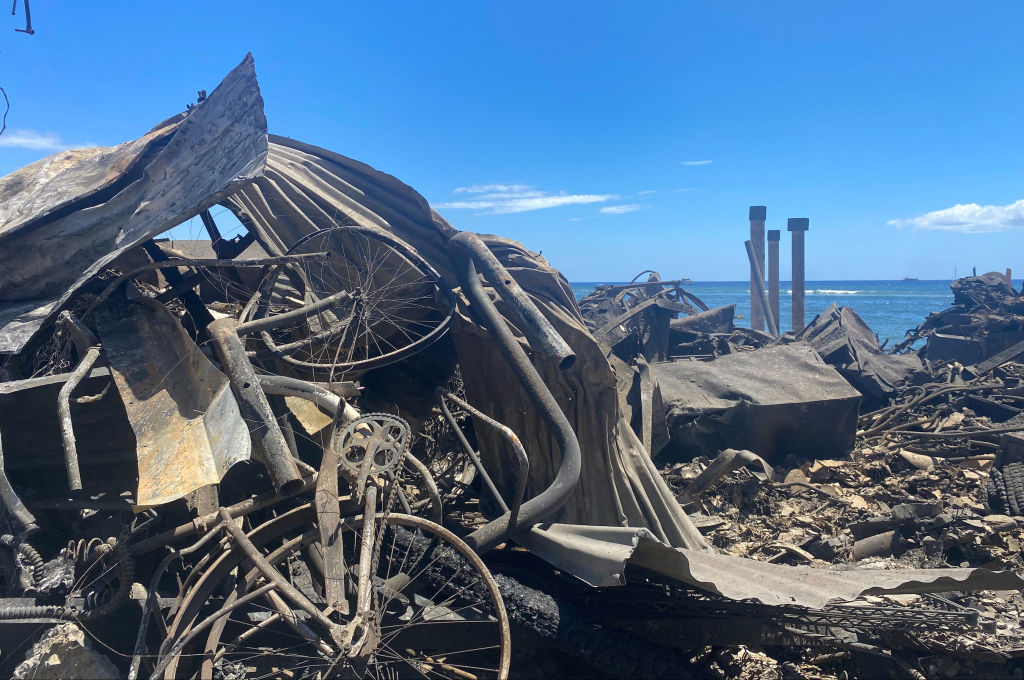
Burned cars, destroyed buildings and homes are pictured in the aftermath of a wildfire in Lahaina, western Maui, Hawaii
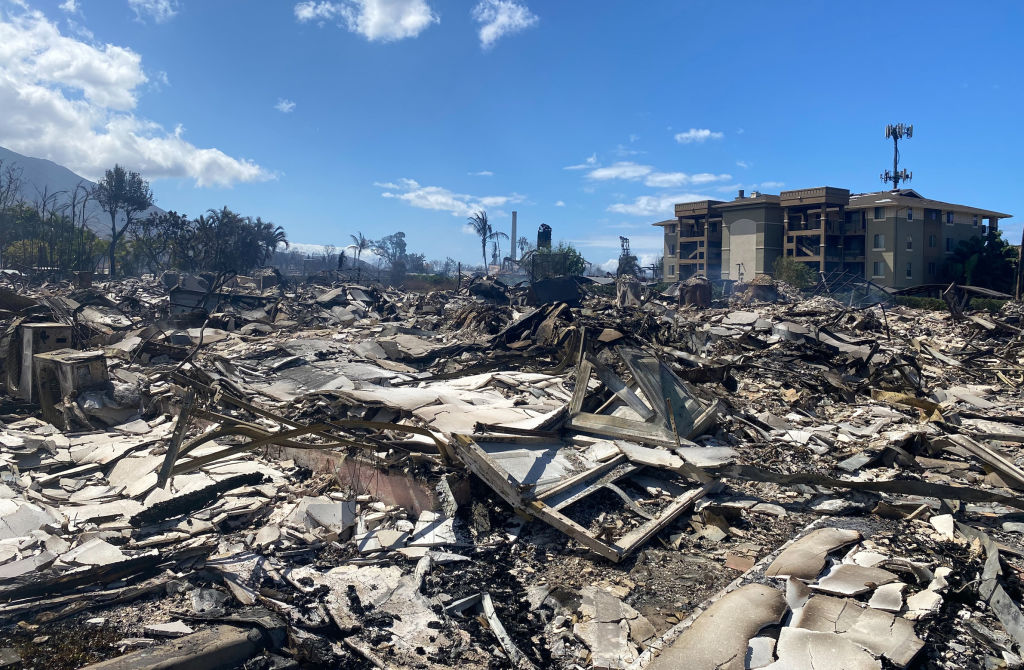
Destroyed buildings and homes are pictured in the aftermath of a wildfire in Lahaina, western Maui, Hawaii.
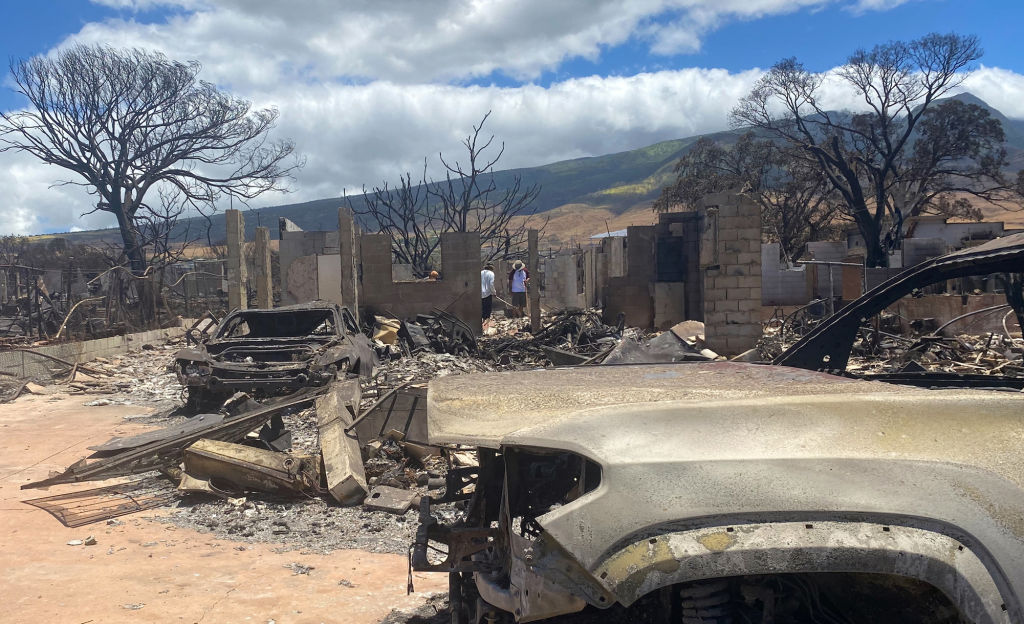
Residents walk among their destroyed home in the aftermath of a wildfire in Lahaina, western Maui, Hawaii.
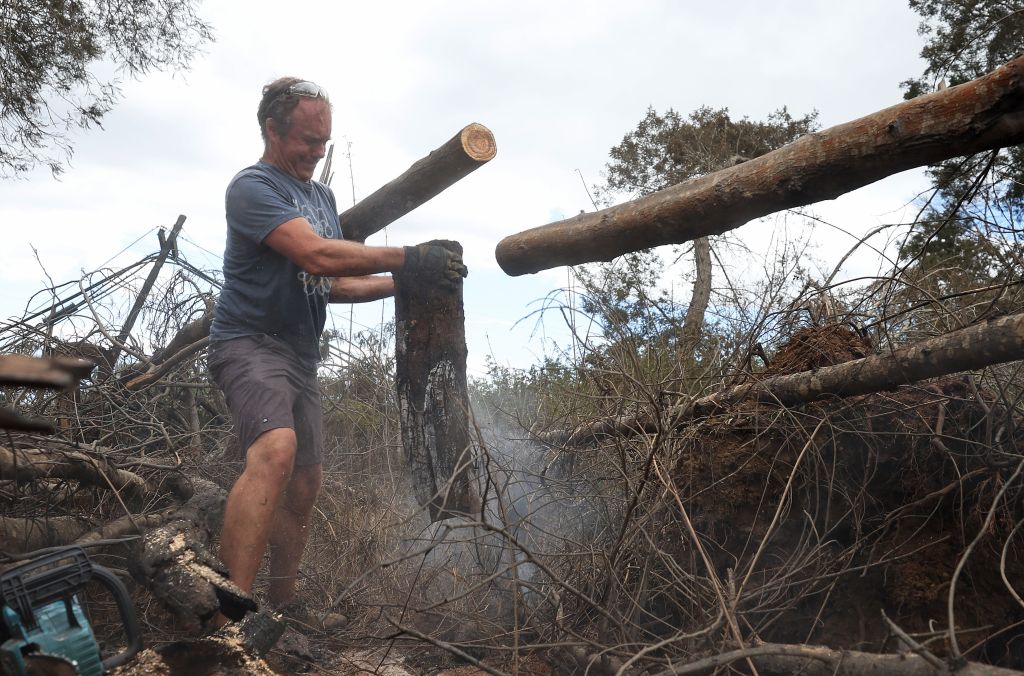
Zoltan Balogh clears away trees that were burned by wildfire in Kula, Hawaii.
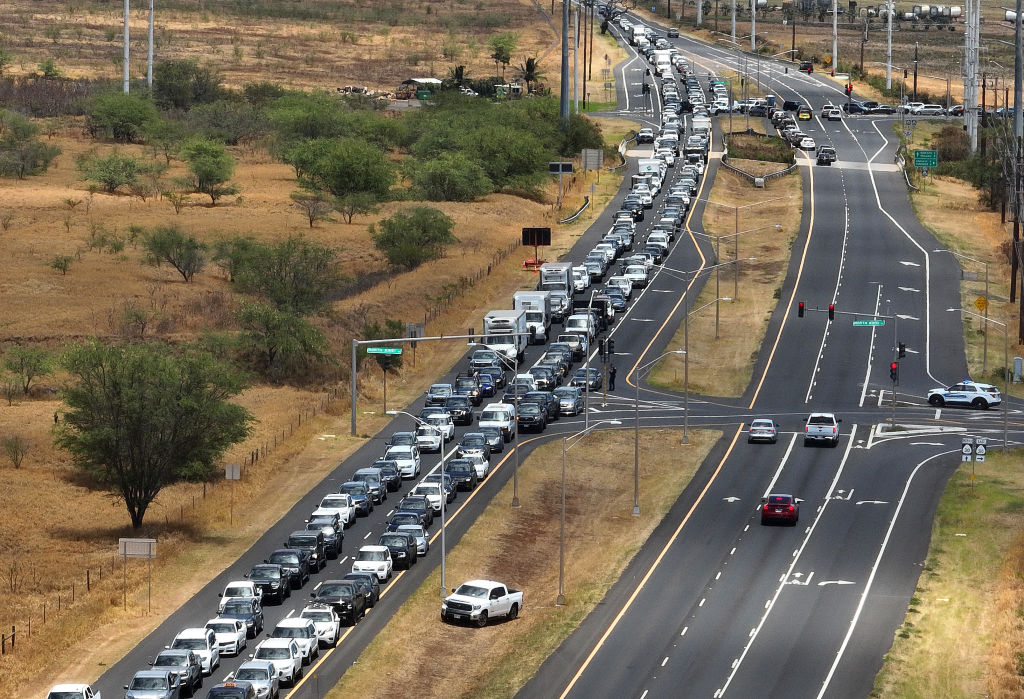
In an aerial view, cars back up for miles on the Honoapiilani highway as residents are allowed back into areas affected by the recent wildfire on Friday.
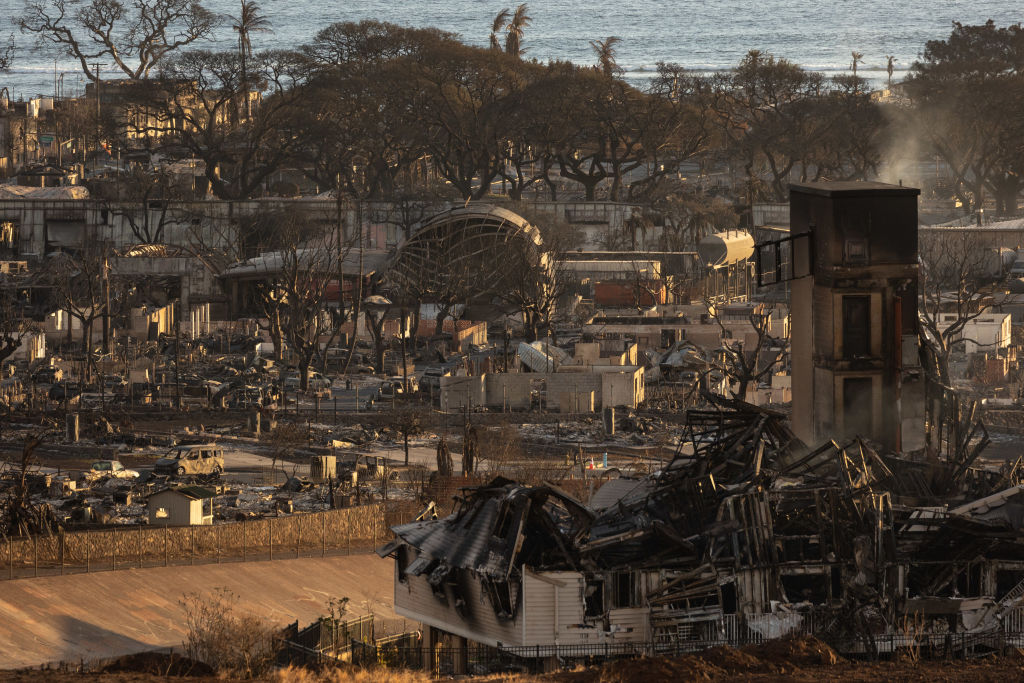
Burned houses and buildings are pictured in the aftermath of a wildfire, is seen in Lahaina, western Maui, Hawaii.